Practice Area
Machine Mediation
Integrate Humans and Machine
Designing automation and AI interactions so they enhance human judgment, not replace it blindly.

Domain > Sociotechnical Systems
Human, organizational, and technical dynamics continuously shape each other. Decisions, actions, and knowledge emerge through their interaction rather than any single part.

Designing automation and AI interactions so they enhance human judgment, not replace it blindly.
The human networks, norms, and shared practices that create living structures of coordination and meaning.
Sociotechnical systems are where knowledge actually lives.
Every decision, artifact, and outcome emerges from the interaction between people, tools, and the structures that connect them. There is no “technical system” separate from the humans who interpret, adapt, and operate within it—and no “human system” untouched by the tools that shape behavior and possibility.
When these elements are treated as separate concerns, systems become brittle. Technology scales without meaning. People compensate through effort, workarounds, and invisible coordination. Knowledge fragments instead of compounding.
When they are designed together, systems become adaptive. Human judgment is supported rather than replaced. Technology extends capability instead of constraining it. Relationships carry meaning across roles, tools, and time.
This domain focuses on making those interactions visible and intentional—so knowledge can move through the system without distortion, loss, or unnecessary effort.
Knowledge can’t flow when people use the same words to describe different experiences. Defining important concepts — so others understand what you mean when you use them — is a core knowledge practice.
Constraints sound like limits, but in living systems they’re what make creativity possible. Without them, you get chaos; with too many, you get stagnation. Enabling Constraints define the boundaries where self-organization can flourish. They are the difference between a jazz ensemble and pure noise.
“Socio-technical research is about mutual benefits derived from the intersection of social and technical elements.”
“Successful systems are those which are jointly optimized, taking into account both technical efficiency and the needs of people.”
“We shape our tools, and thereafter our tools shape us.”
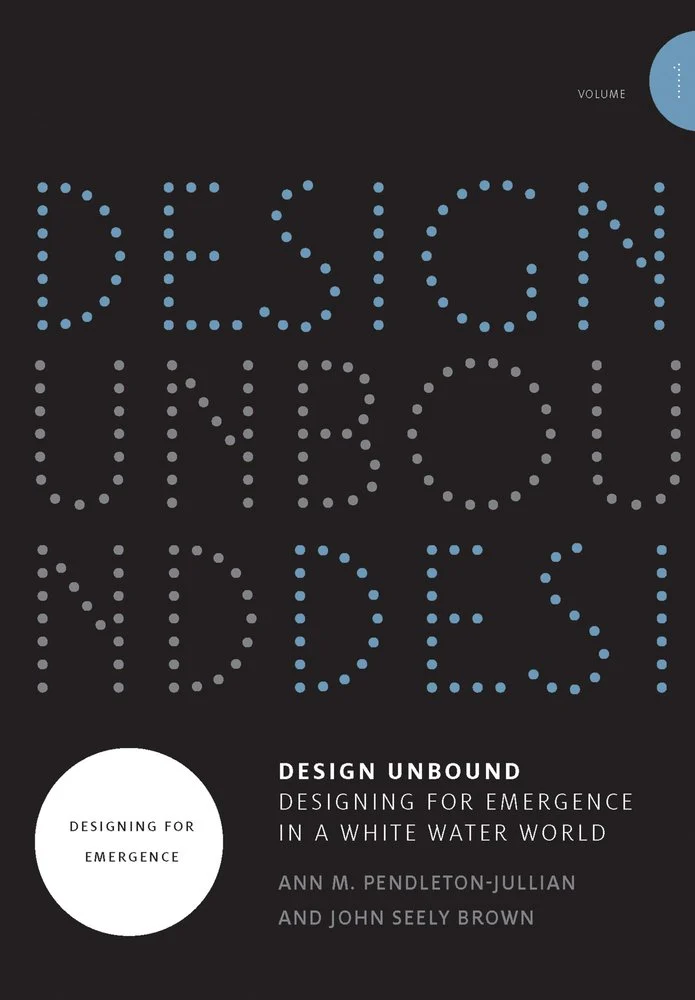
Ann M. Pendleton-Jullian
A systems-oriented exploration of design as an adaptive, participatory practice for shaping complex living environments rather than controlling static objects.
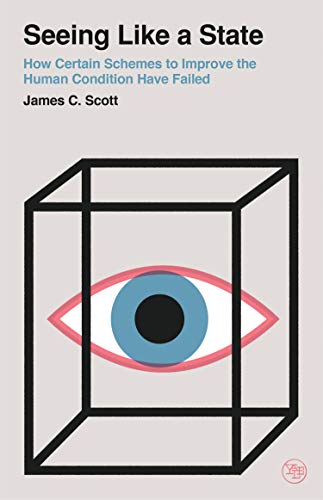
James C. Scott
Large institutions often simplify reality in order to manage it. Seeing Like a State explores how those simplifications can produce unintended consequences when they replace local knowledge and lived experience.
Designing systems where human and technical elements are shaped together, so improvements in one do not degrade the other.
Teams are given the authority to make decisions about their work, along with accountability for outcomes—enabling adaptation without losing coherence.
Systems that continuously interact with and adapt to their environment, rather than operating as closed, controlled mechanisms.

Use the input form to share your feedback on this page.
Or join the community. Discuss your experiences, share knowledge, learn more, together.
A learning journey through the fireswamp of modern knowledge work — where how you learn matters more than what you know.
© 2026 Mentrix Group | All systems rearchitected