Modern institutions depend upon simplification.
Governments, organizations, and large systems must reduce complexity in order to coordinate action. They create maps, classifications, metrics, standards, and models that make people, places, and activities easier to understand from a distance.
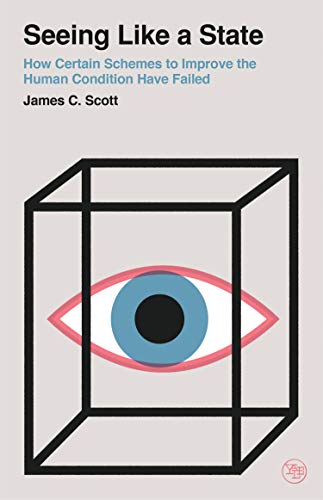
Scott refers to this process as legibility.
Legibility is not inherently harmful. In many cases, it is necessary. Institutions cannot function without abstractions that allow them to perceive patterns and make decisions at scale.
Problems arise when those abstractions become substitutes for reality.
Through examples ranging from scientific forestry and city planning to agricultural modernization and political reform, Scott demonstrates how large-scale interventions often fail when simplified models are treated as complete representations of complex social systems.
A recurring theme is the tension between formal knowledge and local knowledge. Institutions tend to privilege information that can be measured, categorized, and standardized. Yet much of what makes systems function exists in forms that are difficult to formalize: practical experience, tacit knowledge, informal relationships, cultural norms, and local adaptation.
Scott refers to this situated knowledge as metis—the practical wisdom that emerges through direct engagement with a specific context. Metis allows individuals and communities to respond to local conditions in ways that centralized systems often cannot anticipate.
The book is not an argument against planning or coordination. Rather, it is a warning against overconfidence. Systems become fragile when leaders mistake models for reality and assume that what cannot be measured or standardized does not matter.
At its core, Seeing Like a State is a study of how knowledge moves between scales. It asks what is lost when rich, contextual understanding is translated into simplified representations designed for administration and control.
Why this belongs here
This book is one of the clearest explanations ever written of the tension between formal knowledge and situated knowledge.
Almost every organizational transformation encounters this challenge: leaders seek visibility, standardization, and control, while frontline practitioners possess contextual knowledge that cannot be fully captured in centralized models.
Knowledge Flow is deeply concerned with how understanding changes as it moves through systems. Information is often compressed, summarized, classified, and translated in order to become manageable. These activities create value, but they also create loss.
Scott’s work helps explain why many information systems fail despite having abundant data. They become optimized for legibility rather than understanding.
His distinction between formal models and lived reality serves as an important reminder that intelligence emerges not only from abstraction, but also from preserving the context, relationships, and practical knowledge that abstractions inevitably leave behind.