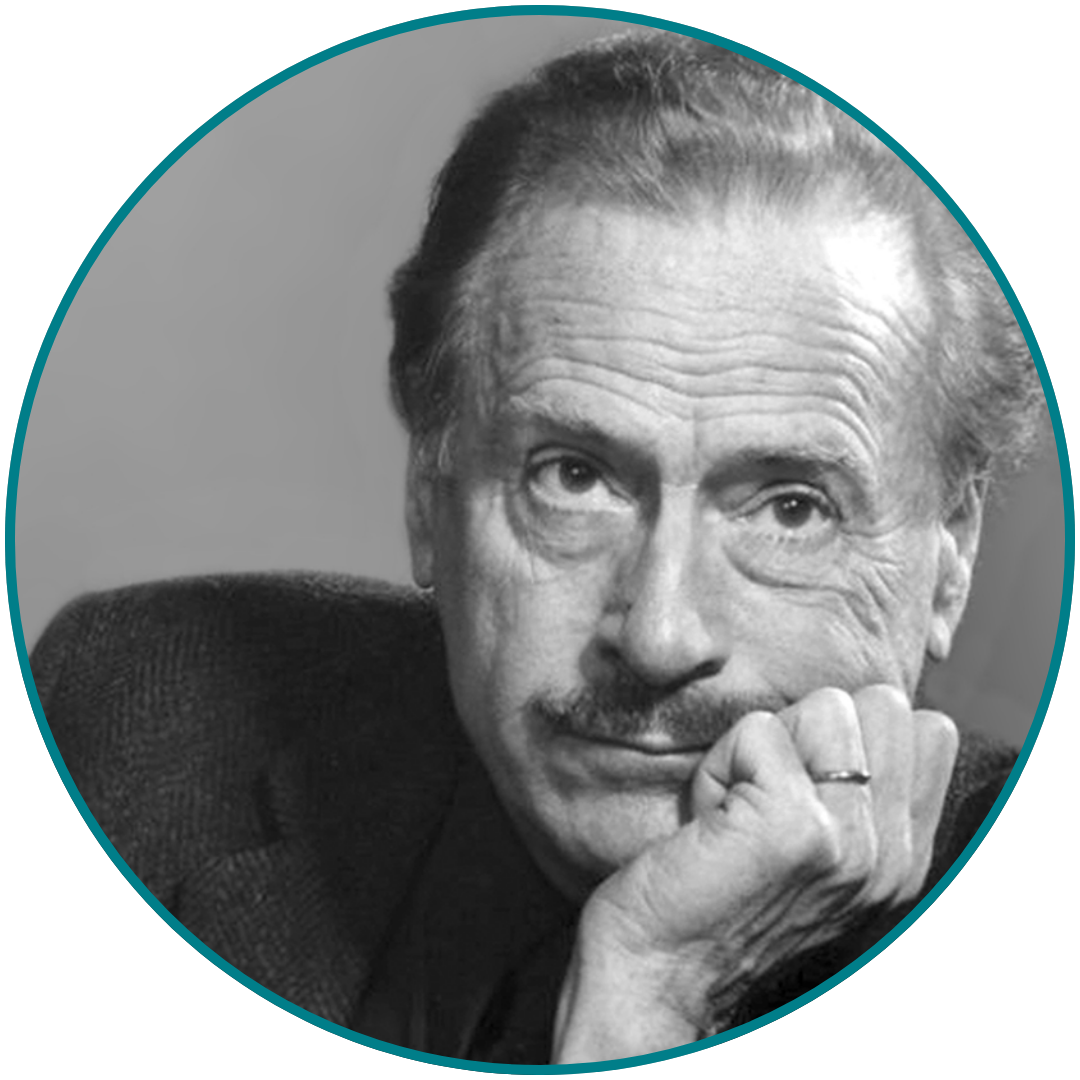
Marshall McLuhan was a media theorist whose work transformed how people understand communication systems and technological environments. Rather than focusing primarily on the content transmitted through media, McLuhan examined how the structure of media itself reshapes human attention, cognition, culture, and social organization.
His famous phrase, “the medium is the message,” argued that technologies alter patterns of perception and relationship independently of the specific information they contain. Print, television, radio, and digital networks each create different modes of awareness, interaction, memory, and collective experience.
McLuhan viewed media as environmental forces that reorganize society by changing the scale, speed, and pattern of human activity. His work anticipated many aspects of networked digital life decades before the rise of the modern internet.
Rather than treating technology as neutral infrastructure, McLuhan explored how tools actively shape the conditions under which meaning, identity, and social coordination emerge.
Relevance to Knowledge Flow
McLuhan’s work helps reveal that knowledge systems are not neutral containers for information.
The structure of a system changes how people perceive, interpret, relate, and act. Communication environments shape attention, memory, emotional dynamics, trust, speed, fragmentation, and collective sense-making.
Knowledge Flow depends not only on what information exists, but on the environments through which information moves. McLuhan’s work illuminates how technological systems influence the very possibility of shared understanding.