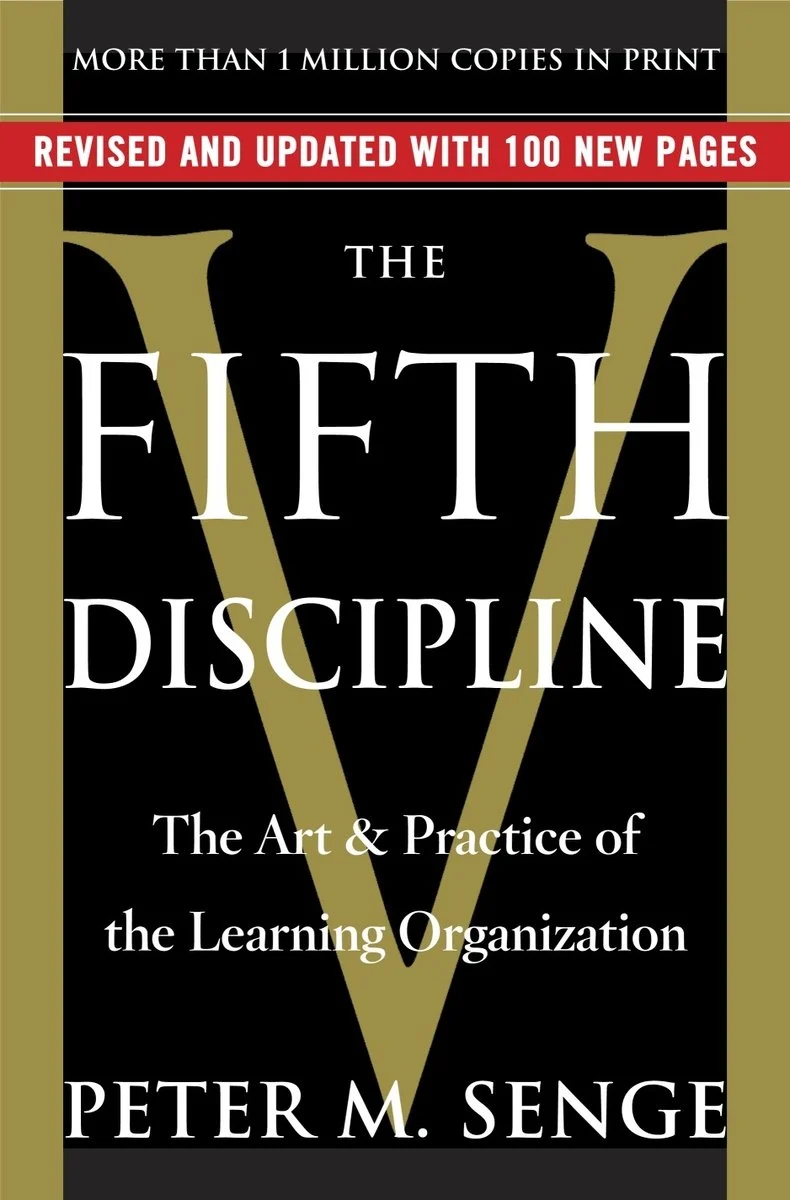
In The Fifth Discipline, Peter Senge argues that organizations capable of long-term adaptation must become learning systems rather than purely operational machines.
The book introduces systems thinking as the “fifth discipline” integrating four other capacities: personal mastery, mental models, shared vision, and team learning. Together, these practices help organizations perceive patterns, surface assumptions, and respond more intelligently to complex challenges.
Senge emphasizes that many organizational problems persist because people focus on isolated events rather than systemic relationships and delayed consequences. Reactive decision-making, fragmented thinking, and rigid assumptions prevent organizations from learning effectively.
The Fifth Discipline also explores how dialogue, reflection, and shared understanding contribute to collective intelligence. Learning organizations cultivate environments where people can question assumptions, engage across perspectives, and adapt together rather than merely reacting to crises.
Why this belongs here
The Fifth Discipline strongly overlaps with Knowledge Flow’s emphasis on organizational learning, relational intelligence, and systems awareness.
Knowledge systems require more than information management. They depend on environments where reflection, adaptation, participation, and shared sense-making can occur over time.
Senge’s work reinforces a foundational principle of Knowledge Flow: intelligence is not an individual possession but an emergent property of systems capable of learning together.