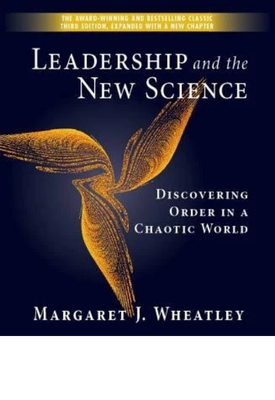

Margaret Wheatley’s work examines how organizations behave when understood as living systems rather than predictable machines. Drawing from systems theory, complexity science, ecology, and quantum theory, she challenges mechanistic approaches to leadership, planning, and control.
Her writing consistently emphasizes relationship as the fundamental organizing force within human systems. Information, meaning, trust, learning, and adaptation emerge not through rigid control structures alone, but through patterns of connection, participation, and interaction across systems.
Wheatley also explores how organizations respond to uncertainty and change. Rather than seeking perfect predictability, she advocates cultivating resilience, adaptability, reflection, and collective sense-making within complex environments.
A recurring theme in her work involves the human need for meaning and coherence. Systems become fragmented and reactive when people lose connection to shared purpose, identity, and participation in something larger than isolated tasks.
Her writing often blends organizational insight with philosophical and deeply human reflection, emphasizing attention, presence, listening, and relational awareness as essential leadership capacities.
Relevance to Knowledge Flow
Wheatley’s work strongly reinforces Knowledge Flow’s understanding of organizations as living sociotechnical systems.
Knowledge cannot be reduced to information management alone. It emerges through relationships, trust, participation, shared meaning, and adaptive interaction across time.
Her emphasis on emergence and relational coherence aligns deeply with Knowledge Flow’s rejection of purely mechanistic models of organizational intelligence. Systems become more capable not simply by increasing control, but by strengthening the conditions that support learning, connection, and collective sense-making.