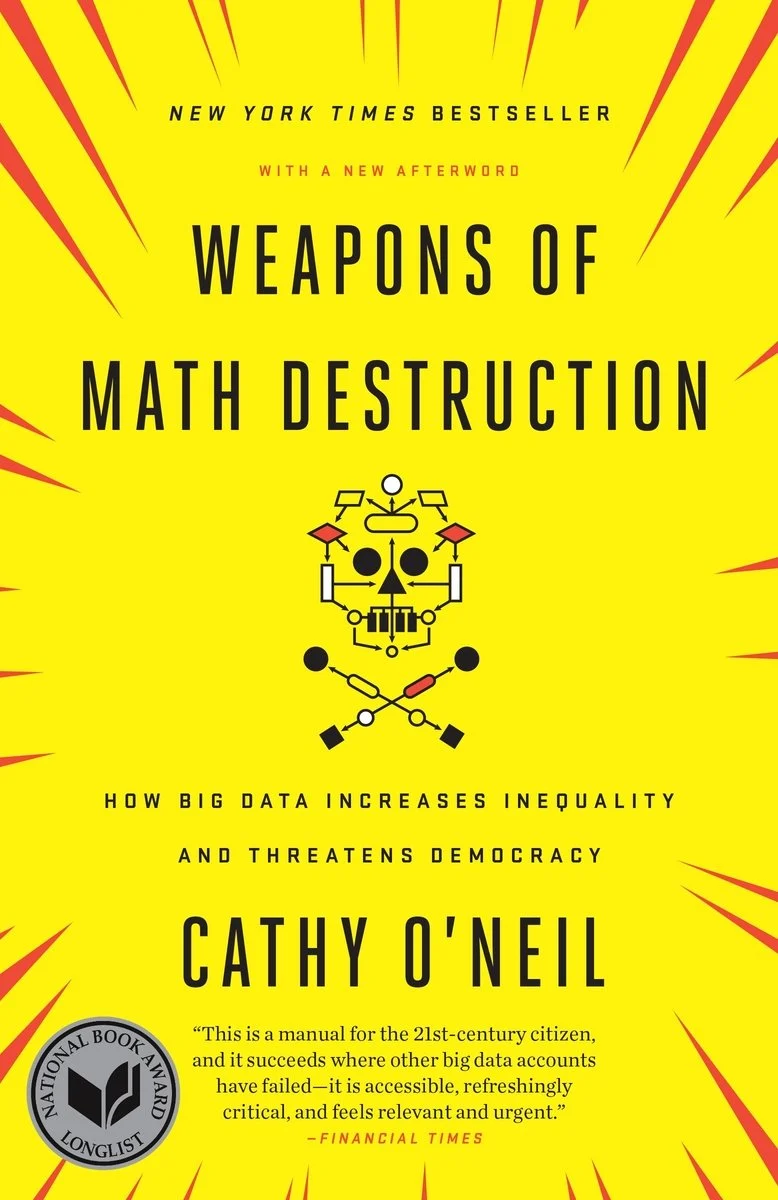
Weapons of Math Destruction challenges the assumption that algorithms are inherently objective. O’Neil argues that mathematical models reflect the values, assumptions, and incentives of the people who create them.
Many large-scale decision systems operate with little transparency. Individuals affected by these systems often have no ability to understand how decisions were made or to challenge them when they are wrong.
The book introduces the concept of “Weapons of Math Destruction” (WMDs): models that are opaque, operate at scale, and cause harm. These systems frequently affect vulnerable populations while reinforcing existing inequalities.
O’Neil demonstrates how feedback loops can make harmful models appear accurate. Decisions generated by a system influence future data, which then seems to validate the model’s assumptions.
A recurring theme is the tension between optimization and human judgment. Systems designed to maximize efficiency often neglect fairness, context, and accountability.
The book ultimately calls for greater transparency, auditing, and ethical responsibility in the design of algorithmic systems.
Why this belongs here
Knowledge Flow is deeply concerned with how systems generate, distribute, and act upon knowledge.
Weapons of Math Destruction illustrates what happens when information systems become detached from feedback, accountability, and human understanding. Models that cannot explain themselves create the illusion of knowledge while obscuring uncertainty and error.
The book serves as a reminder that intelligence is not simply prediction. It requires context, transparency, learning, and the ability to challenge assumptions.