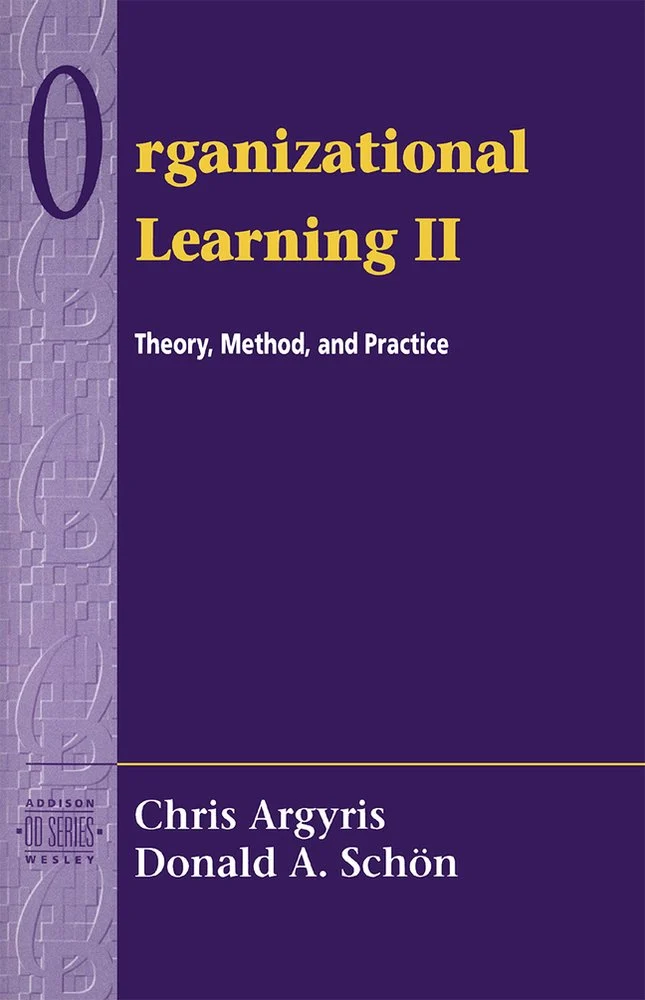
In Organizational Learning II, Chris Argyris and Donald Schön examine how individuals and organizations process experience, respond to error, and either enable or inhibit meaningful learning.
The book expands on concepts such as single-loop and double-loop learning. Single-loop learning focuses on correcting problems within existing assumptions and structures. Double-loop learning questions the assumptions, goals, and mental models generating those problems in the first place.
Argyris and Schön also explore defensive routines: behaviors and organizational patterns that protect people from embarrassment, uncertainty, conflict, or vulnerability while simultaneously limiting reflection and adaptation.
A recurring insight throughout the book is that many organizations reward appearances of competence while unintentionally suppressing curiosity, experimentation, and honest inquiry. As a result, systems become trapped in cycles of performative agreement and shallow learning.
The authors argue that real learning requires creating conditions where assumptions can be surfaced, examined, revised, and tested collectively.
Why this belongs here
Organizational Learning II addresses one of the deepest concerns of Knowledge Flow: why intelligent people and organizations so often struggle to learn effectively.
Knowledge systems fail when uncertainty becomes unsafe, assumptions harden into unquestioned truths, or defensive behavior suppresses reflection and feedback. The book illuminates how organizational structures and relational dynamics shape whether learning can actually occur.
Its emphasis on double-loop learning aligns strongly with Knowledge Flow’s focus on recalibration, adaptation, and the continual refinement of understanding through lived experience.