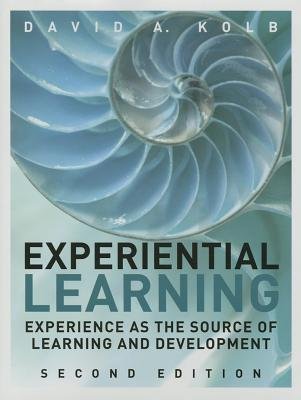
In Experiential Learning, David A. Kolb presents learning as an ongoing adaptive process rooted in lived experience. Rather than treating knowledge as static information to be acquired, Kolb argues that understanding emerges through continual movement between action, reflection, interpretation, and experimentation.
The book introduces the experiential learning cycle: concrete experience, reflective observation, abstract conceptualization, and active experimentation. Effective learning involves moving across all four modes rather than relying exclusively on one.
Kolb emphasizes that experience alone does not guarantee learning. Reflection, synthesis, and testing are necessary for transforming experience into usable understanding. Likewise, abstract concepts remain limited unless they are integrated back into lived practice.
The book also explores how individuals and organizations develop preferred approaches to learning and how those preferences shape communication, collaboration, and adaptation.
Why this belongs here
Experiential Learning aligns closely with the foundational rhythm of Knowledge Flow itself.
Knowledge is not simply acquired through exposure to information. It emerges through participation, reflection, synthesis, experimentation, and adaptation across time. Kolb’s cyclical approach reinforces the idea that learning is embodied, iterative, and deeply connected to lived experience.
The book also highlights an important principle of Knowledge Flow: intelligence develops not through static expertise alone, but through the continual refinement of understanding in relationship with changing environments.