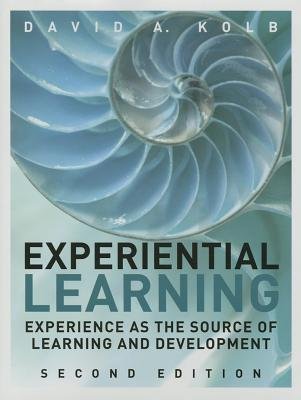

David Kolb’s work focuses on how people learn through experience rather than passive information transfer. His experiential learning theory proposes that learning emerges through an ongoing cycle involving concrete experience, reflective observation, abstract conceptualization, and active experimentation.
Rather than treating knowledge as static content to be acquired, Kolb frames learning as an adaptive process that integrates action, reflection, interpretation, and revision over time. Experience alone is insufficient; learning requires reflection on experience and experimentation with new understanding.
Kolb’s work also highlights that people engage learning differently depending on their tendencies toward action, observation, conceptualization, or experimentation. Effective learning environments support movement across these modes rather than privileging only one.
His ideas have influenced education, organizational learning, leadership development, and reflective practice across many disciplines.
Relevance to Knowledge Flow
Kolb’s cyclical view of learning aligns strongly with the Knowledge Flow Loop itself.
Knowledge emerges not simply through exposure to information, but through iterative movement between lived experience, reflection, synthesis, experimentation, and adaptation. This process-oriented understanding reinforces the idea that knowledge is participatory and embodied rather than purely conceptual.
His work also supports a foundational principle of Knowledge Flow: learning is something we do, not something we merely possess.