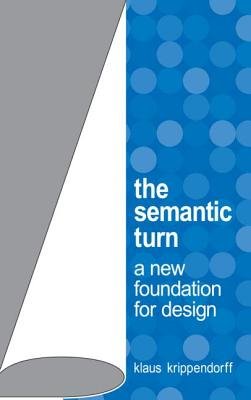
Many design traditions focus on form, function, or efficiency. Krippendorff argues that design must also account for meaning.
People do not simply use artifacts. They interpret them, describe them, adapt them, and incorporate them into practices and identities. The Semantic Turn places language, perception, and interpretation at the center of design.
This is especially important for information and knowledge systems, where the product is often not a physical object but a structure for understanding. A system can be technically functional and still fail if users cannot make sense of what it means, what it affords, or how its parts relate.
Krippendorff's work pushes design toward human interpretation rather than designer intention alone. At its core, the book asks designers to treat meaning as a design material.
Why this belongs here
Knowledge Flow is concerned with how meaning survives movement through systems. The Semantic Turn belongs here because it reminds us that knowledge architecture is not only structural; it is semantic, interpretive, and human.