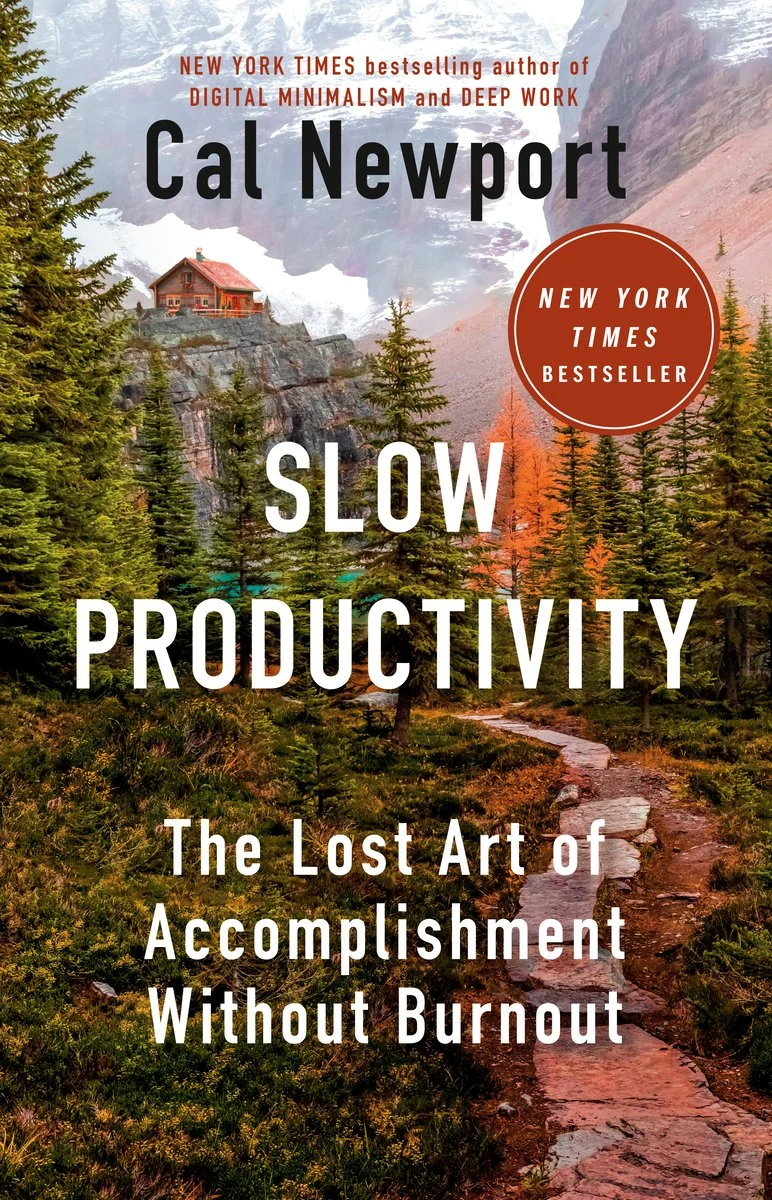
Knowledge work is often measured through activity. Messages, meetings, tasks, and responsiveness become proxies for value. Newport argues that this produces pseudo-productivity.
People appear busy while sacrificing the conditions required for meaningful work.
Slow Productivity proposes doing fewer things, working at a natural pace, and caring more about quality. This is not laziness. It is a systems critique of overloaded knowledge work. The book helps name why constant acceleration damages thinking.
Sustainable knowledge production requires rhythm, recovery, and focus.
Why this belongs here
Knowledge Flow depends on the conditions under which thinking can happen. Slow Productivity belongs here because it connects temporal design to knowledge quality.