Information professionals often work at the boundary between language, structure, and use.
They must organize resources in ways that make sense to people while also supporting increasingly technical systems for retrieval, integration, and analysis.
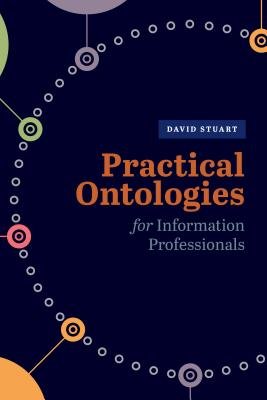
Practical Ontologies for Information Professionals helps bridge that gap.
The book explains ontology as more than classification. Taxonomies name categories, but ontologies express relationships, constraints, and conceptual meaning.
This matters because knowledge work increasingly depends on connections across systems.
The book emphasizes practical modeling decisions: what concepts to represent, how relationships should be named, where hierarchy helps, and where it hides important meaning.
It treats ontology development as an interpretive practice. The work is not merely technical; it is a way of clarifying how a domain understands itself.
Why this belongs here
Knowledge Flow requires structures that preserve meaning as information moves. This book belongs here because it helps practitioners create semantic infrastructure that supports connection, discovery, and shared understanding.