Knowledge Flow

Resource > Natalya Noy

Ontology Development 101

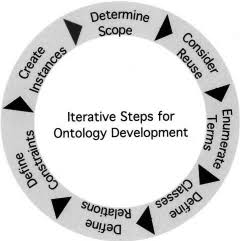
Ontologies make domain meaning explicit so people and systems can share concepts consistently. Ontology Development 101 introduces practical steps for defining classes, relationships, properties, and instances in a usable knowledge model.

Neural tree

Many systems fail because their concepts remain implicit.

People use the same words differently, different tools encode similar ideas in incompatible ways, and teams assume agreement where only vocabulary overlaps.

Ontology Development 101 addresses this problem by showing how domain knowledge can be represented explicitly.

The paper introduces practical questions: what is the domain, who will use the ontology, what questions should it answer, and how should concepts relate to one another?

Its value lies in its accessibility. Rather than treating ontology as an abstract technical specialty, it presents ontology development as a disciplined modeling practice.

The work helps readers understand that knowledge structures are design artifacts. They encode choices about what exists, what matters, and how things relate.

At its core, the paper is about making meaning durable enough to be shared across people, systems, and time.

Why this belongs here

Knowledge Flow depends on shared meaning. Ontology Development 101 belongs here because it offers a practical entry point into semantic structure: the layer that allows information to become usable knowledge instead of disconnected data.


Natalya Noy is a computer scientist known for work in ontology engineering, knowledge representation, and semantic technologies.

Natalya Noy
Natalya Noy

Deborah McGuinness is a computer scientist whose work focuses on knowledge representation, ontologies, provenance, and explainable systems.

Deborah McGuinness
Deborah McGuinness

Related Resources

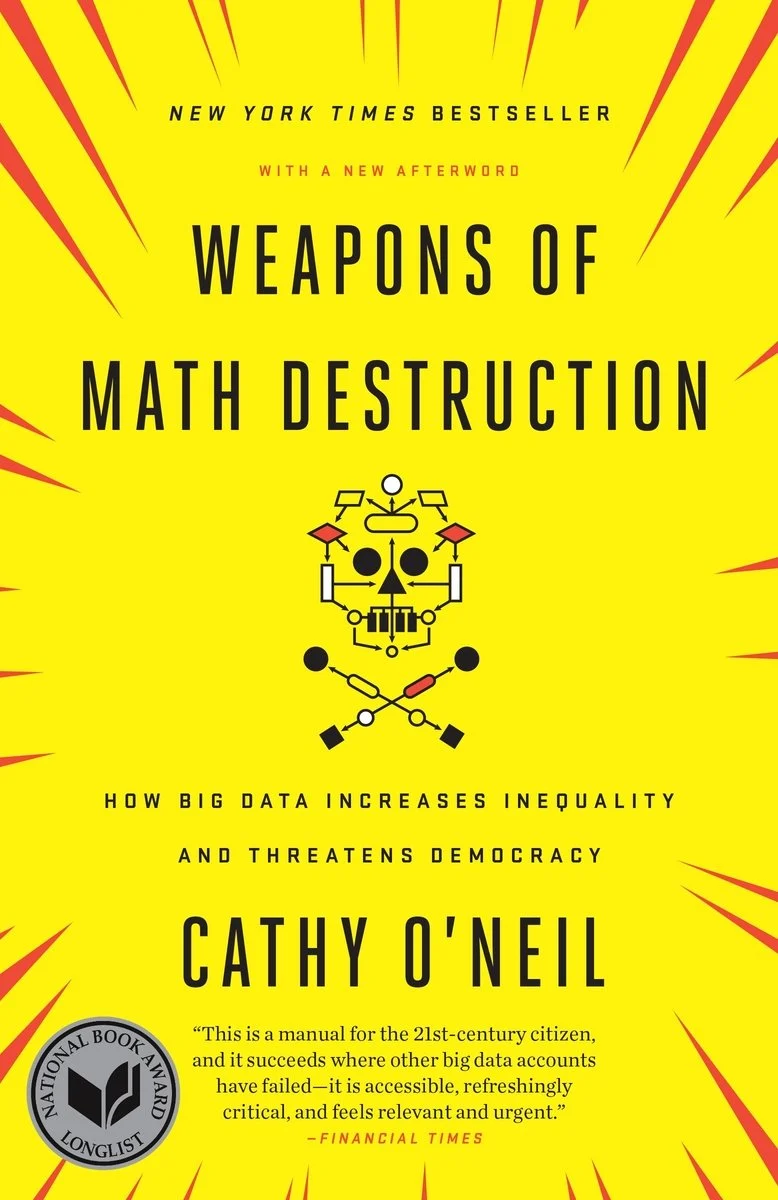
Weapons of Math Destruction

How Big Data Increases Inequality and Threatens Democracy

by Cathy O'Neil

Weapons of Math Destruction

Algorithms increasingly shape decisions about education, employment, policing, healthcare, and finance. Weapons of Math Destruction reveals how opaque mathematical models can amplify inequality, reinforce bias, and create large-scale social harm while appearing objective.


Pattern Set: AI in the Loop

View details

Get Involved in the Knowledge Experience

Use the input form to share your feedback on this page.
Or join the community. Discuss your experiences, share knowledge, learn more, together.

Knowledge Flow by Diana Montalion

A learning journey through the fireswamp of modern knowledge work — where how you learn matters more than what you know.

© 2026 Mentrix Group | All systems rearchitected

Learn

Explore

Connect