Architecture is often imagined as the work of a single expert. In real organizations, architecture emerges through many people making many decisions over time.
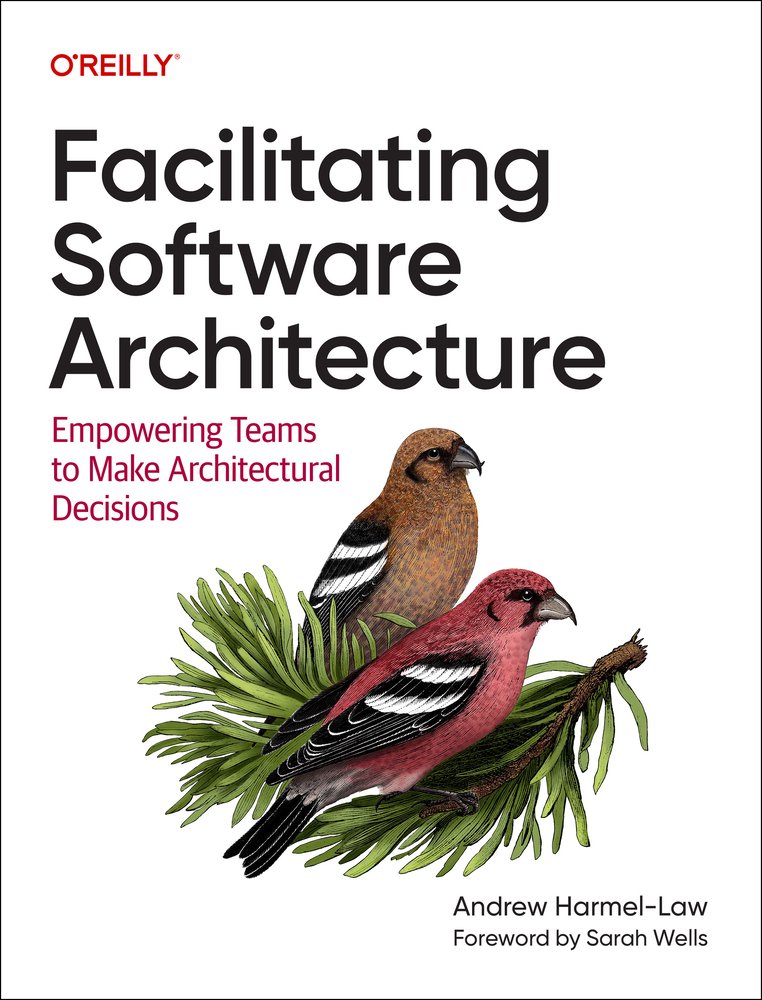
Facilitating Software Architecture treats the architect as a facilitator of that process. The work involves creating alignment, surfacing tradeoffs, making decisions explicit, and helping teams develop architectural capability.
This shifts architecture from command to participation.
It also recognizes that technical decisions are embedded in social systems. Meetings, workshops, decision records, and conversations become architectural media.
The architect's role becomes enabling better collective judgment. That makes architecture a knowledge-flow practice.
Why this belongs here
Knowledge Flow depends on architectures that are understood, owned, and evolved by the people who work within them. This book belongs here because it connects software architecture directly to facilitation, learning, and distributed decision-making.