Classical science often imagined that better measurement would eventually produce perfect prediction.
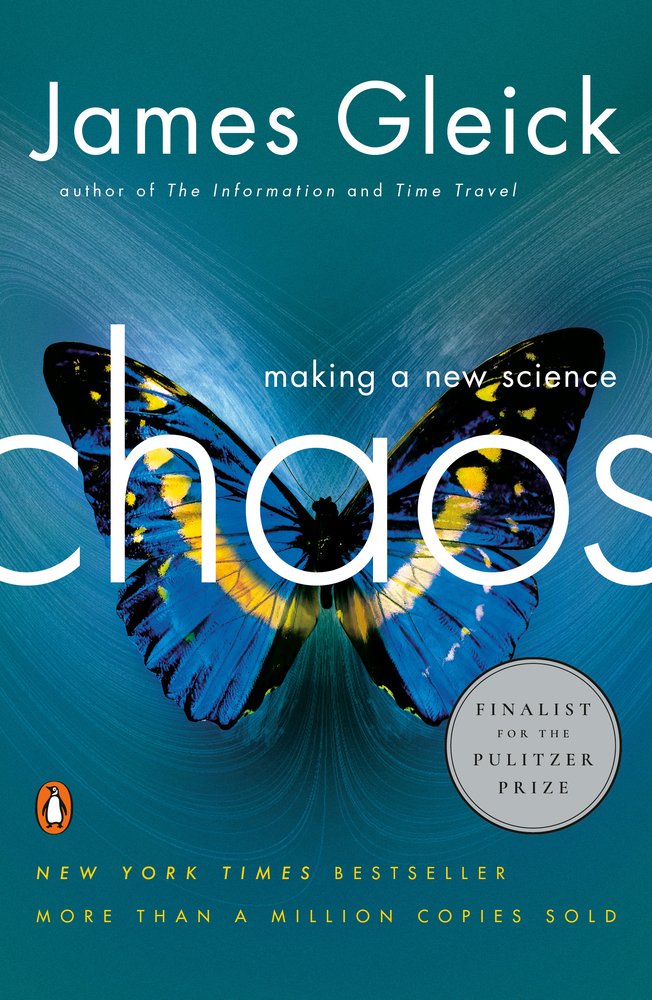
Chaos theory revealed limits to that dream.
Gleick shows how nonlinear systems can behave in ways that are highly sensitive to initial conditions.
Small differences can amplify into dramatically different outcomes.
Weather became the iconic example, but the implications reach far beyond meteorology.
Chaos is not randomness.
It contains structure, recurrence, and strange forms of order.
The book teaches readers to look for patterns in motion rather than stable states.
It changes how we think about control.Why this belongs here: Knowledge Flow must operate in systems where prediction is limited. Chaos belongs here because it teaches temporal humility: the need to design for feedback, adaptation, and resilience rather than certainty.
Why this belongs here
Knowledge Flow must operate in systems where prediction is limited. Chaos belongs here because it teaches temporal humility: the need to design for feedback, adaptation, and resilience rather than certainty.