Traditional architecture often assumes stability.
Evolutionary architecture assumes change.
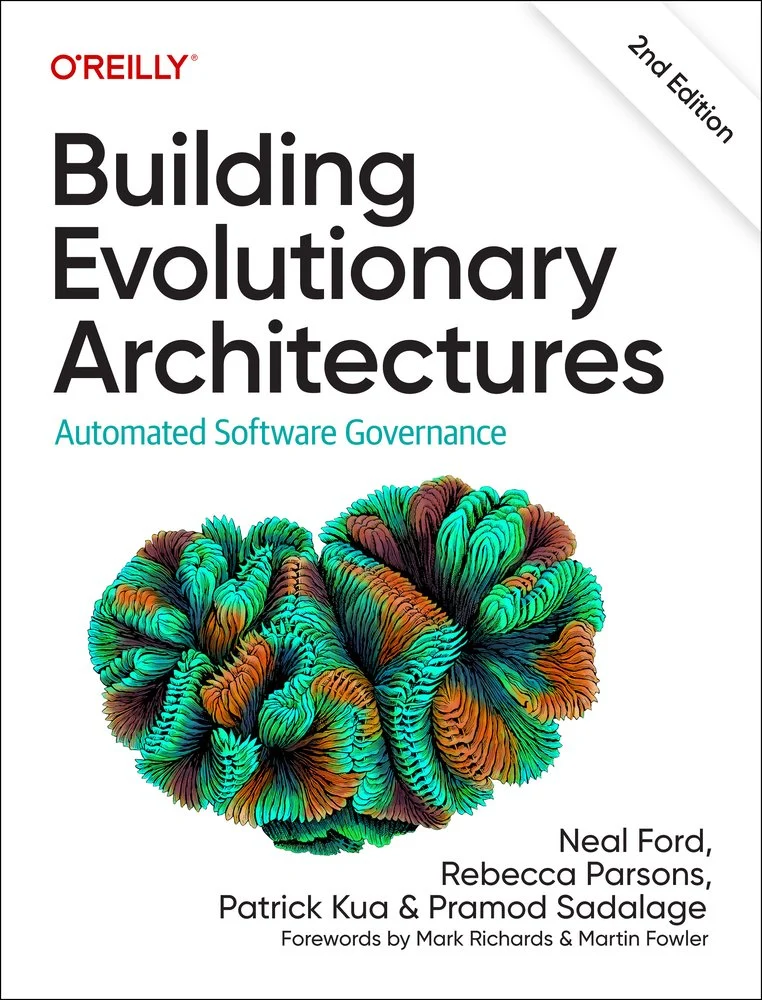
Ford, Kua, and Parsons argue that systems need mechanisms for guided adaptation.
Fitness functions make architectural qualities visible and testable.
Instead of relying on one-time design decisions, teams can continuously evaluate whether the system still supports desired characteristics.
This shifts architecture from prediction to feedback.
Governance becomes lightweight, automated where possible, and connected to actual system behavior.
The book helps architects design systems that can learn.Why this belongs here: Knowledge Flow treats architecture as a living knowledge structure. This book belongs here because it offers concrete ways to preserve coherence while supporting change over time.
Why this belongs here
Knowledge Flow treats architecture as a living knowledge structure. This book belongs here because it offers concrete ways to preserve coherence while supporting change over time.