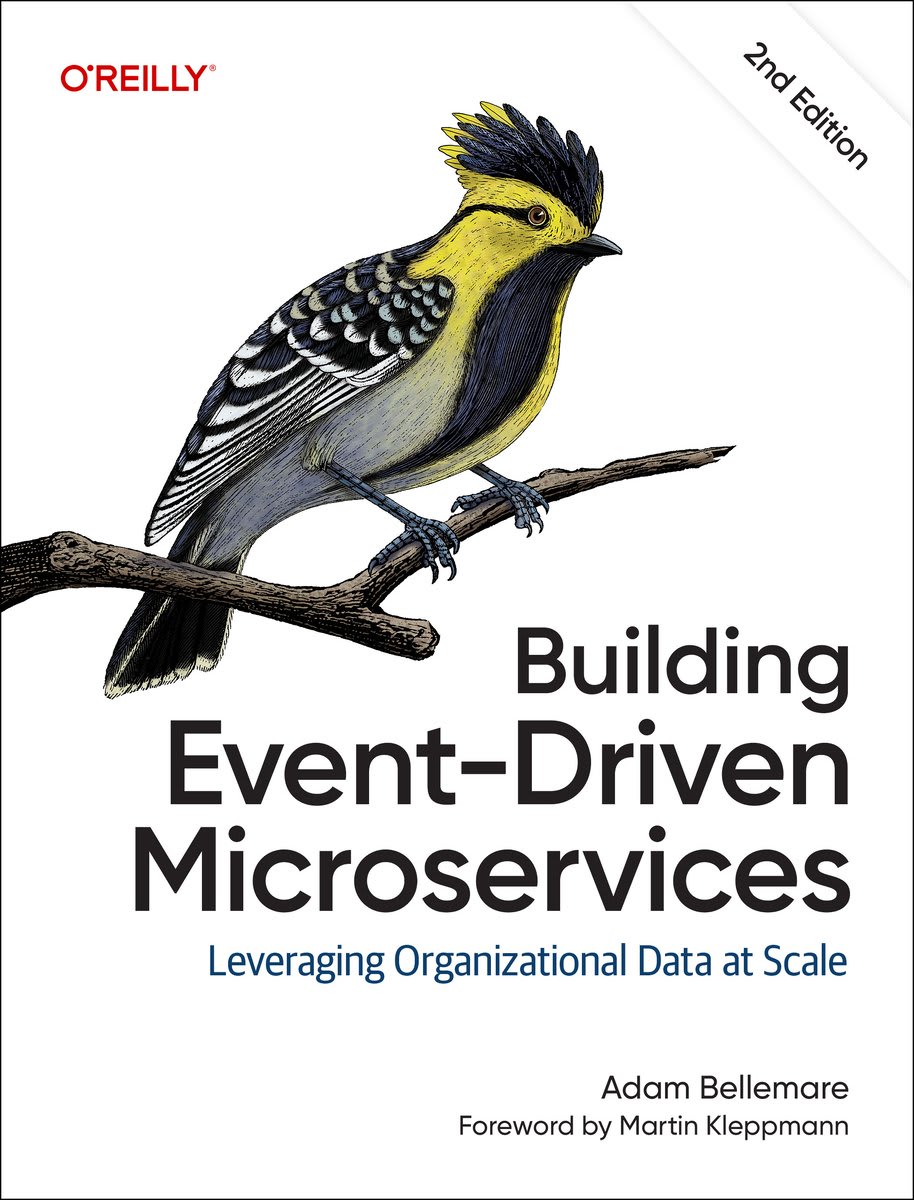
Building Event-Driven Microservices reframes how systems are designed—not as sequences of requests and responses, but as environments shaped by events, change, and time.
In many systems, behavior is modeled as a series of transactions: something happens, a service responds, and the moment passes. But real systems don’t operate in isolated moments. They evolve. They accumulate history. They respond differently based on what has already occurred.
This book shifts the focus from control to coordination.
Events become the primary way systems communicate. State is no longer hidden inside services, but emerges from the flow of those events over time. Instead of tightly coupled interactions, systems become networks of relationships—where components respond, react, and adapt based on what is happening across the whole.
This changes what it means to design.
Rather than orchestrating step-by-step flows, the work becomes shaping how change moves through the system: what is captured, what persists, what triggers further behavior, and how meaning accumulates.
At its core, Building Event-Driven Microservices is about designing systems that do not just process inputs, but participate in ongoing change—systems that can evolve, coordinate, and remain coherent as they grow.
Why this belongs here
This work makes explicit a core principle of Patterns & Temporal Intelligence: systems behave through events, state, and relationships over time.
Without this lens, systems are forced into linear pipelines and transactional models that cannot account for accumulation, adaptation, or coordination. Behavior becomes fragmented, and meaning is lost between interactions.
By designing around events, this approach allows systems to:
- retain memory through state
- respond to patterns rather than isolated inputs
- coordinate across boundaries without central control
What emerges is not just scalability, but continuity—a system that can reflect its own history and respond accordingly.
This is essential to Knowledge Flow.
Knowledge does not move in single steps. It accumulates, triggers, and evolves. Event-driven systems provide the structural conditions for that to happen—making it possible for information to propagate, connect, and generate meaning over time.