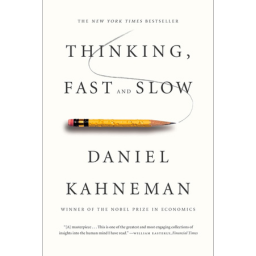
Most people experience their thoughts as a single, unified process.
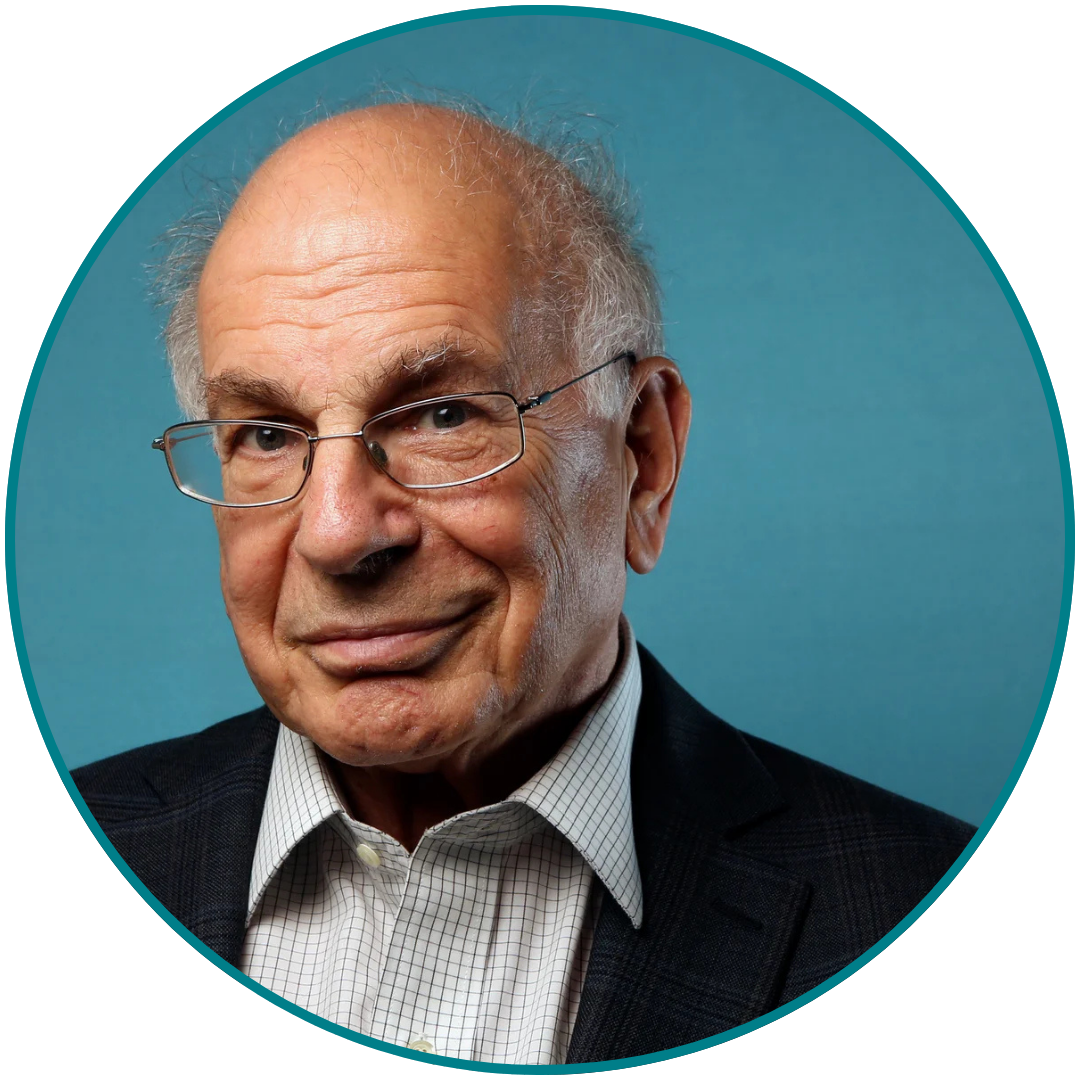
Kahneman argues that human cognition is better understood as the interaction between two distinct modes of thinking.
The first, which he calls System 1, operates quickly, automatically, and intuitively. It recognizes patterns, generates impressions, and allows people to navigate everyday life without conscious effort.
The second, System 2, is slower and more deliberate. It is responsible for careful reasoning, analysis, and reflection. While it is capable of complex thought, it requires attention and effort, making it less likely to engage unless circumstances demand it.
Much of the book explores the consequences of relying too heavily on intuitive thinking. System 1 is remarkably effective in many situations, but it is also prone to predictable errors. These errors appear as cognitive biases, mental shortcuts, and distortions in judgment that influence how people perceive reality.
Kahneman demonstrates how individuals routinely overestimate their understanding of events, underestimate uncertainty, and construct coherent narratives from incomplete information. Confidence often exceeds accuracy, and explanations frequently emerge after decisions have already been made.
A recurring theme throughout the book is that many reasoning failures are not the result of ignorance or incompetence. They are natural consequences of how human cognition has evolved to operate. Intelligent people are not immune to bias; expertise may even reinforce certain forms of overconfidence.
The book also examines how organizations, institutions, and societies amplify these tendencies. Forecasts become overly optimistic, plans underestimate complexity, and groups become vulnerable to collective blind spots. Decisions that appear rational on the surface are often shaped by hidden assumptions and unconscious influences.
Rather than offering a simple prescription for better thinking, Kahneman encourages greater awareness of the limitations of human judgment. Understanding these limitations allows individuals and organizations to create practices, structures, and feedback mechanisms that compensate for predictable weaknesses in reasoning.
At its core, Thinking, Fast and Slow is a study of how people construct understanding. It reveals that many of the obstacles to learning and decision-making originate not in the world itself, but in the cognitive processes through which people interpret it.
Why this belongs here
Knowledge Flow is concerned not only with how information moves through systems, but with how people transform information into understanding.
Many knowledge failures are not failures of access. People possess the information they need, yet still arrive at poor conclusions because of bias, overconfidence, incomplete models, or flawed reasoning processes.
Kahneman’s work provides one of the most influential frameworks for understanding these epistemic limitations. It explains why individuals and organizations consistently struggle with forecasting, estimation, prioritization, and decision-making even when data is abundant.
The book is particularly valuable because it challenges the assumption that intelligence naturally produces good judgment. Knowledge systems must account for human cognitive realities rather than assuming rational behavior.
For Knowledge Flow, Thinking, Fast and Slow serves as a guide to the invisible forces that shape interpretation. It helps explain why understanding requires more than information, and why effective knowledge systems must create conditions that support reflection, feedback, and the continual examination of assumptions.
By making cognitive biases visible, Kahneman provides a foundation for designing better learning practices, better decisions, and ultimately better systems of collective intelligence.