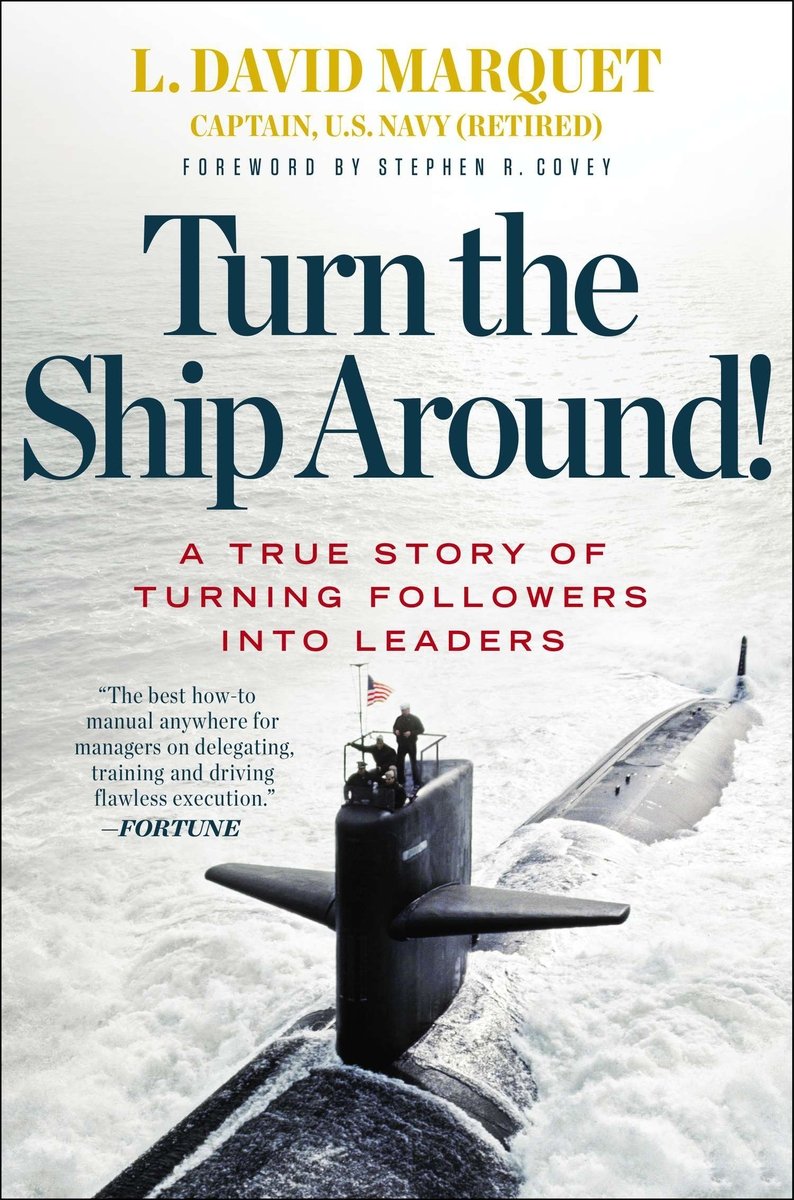

David Marquet’s work examines how leadership structures influence learning, accountability, and adaptive intelligence within organizations. Drawing from his experience commanding the nuclear submarine USS Santa Fe, he challenged traditional command-and-control models that centralize authority while suppressing initiative and learning.
Marquet observed that highly controlled systems often create dependency patterns where people wait for permission rather than developing situational awareness, judgment, and ownership. In contrast, intent-based leadership distributes decision-making closer to where knowledge and context actually exist.
His work emphasizes creating conditions where people think actively, communicate clearly, and participate meaningfully in operational learning rather than merely executing instructions mechanically.
Marquet also highlights the importance of language, trust, and structural design in shaping organizational behavior. Small shifts in communication and authority patterns can significantly alter how knowledge moves through a system.
Relevance to Knowledge Flow
Marquet’s work aligns deeply with Knowledge Flow’s emphasis on distributed intelligence and adaptive participation.
Knowledge systems become fragile when authority concentrates decision-making away from local context and lived experience. Healthy systems cultivate the capacity for observation, interpretation, initiative, and learning throughout the organization rather than only at the top.
His work reinforces the idea that leadership is not simply directing action, but designing conditions where intelligence can emerge collectively across relationships and operational environments.