
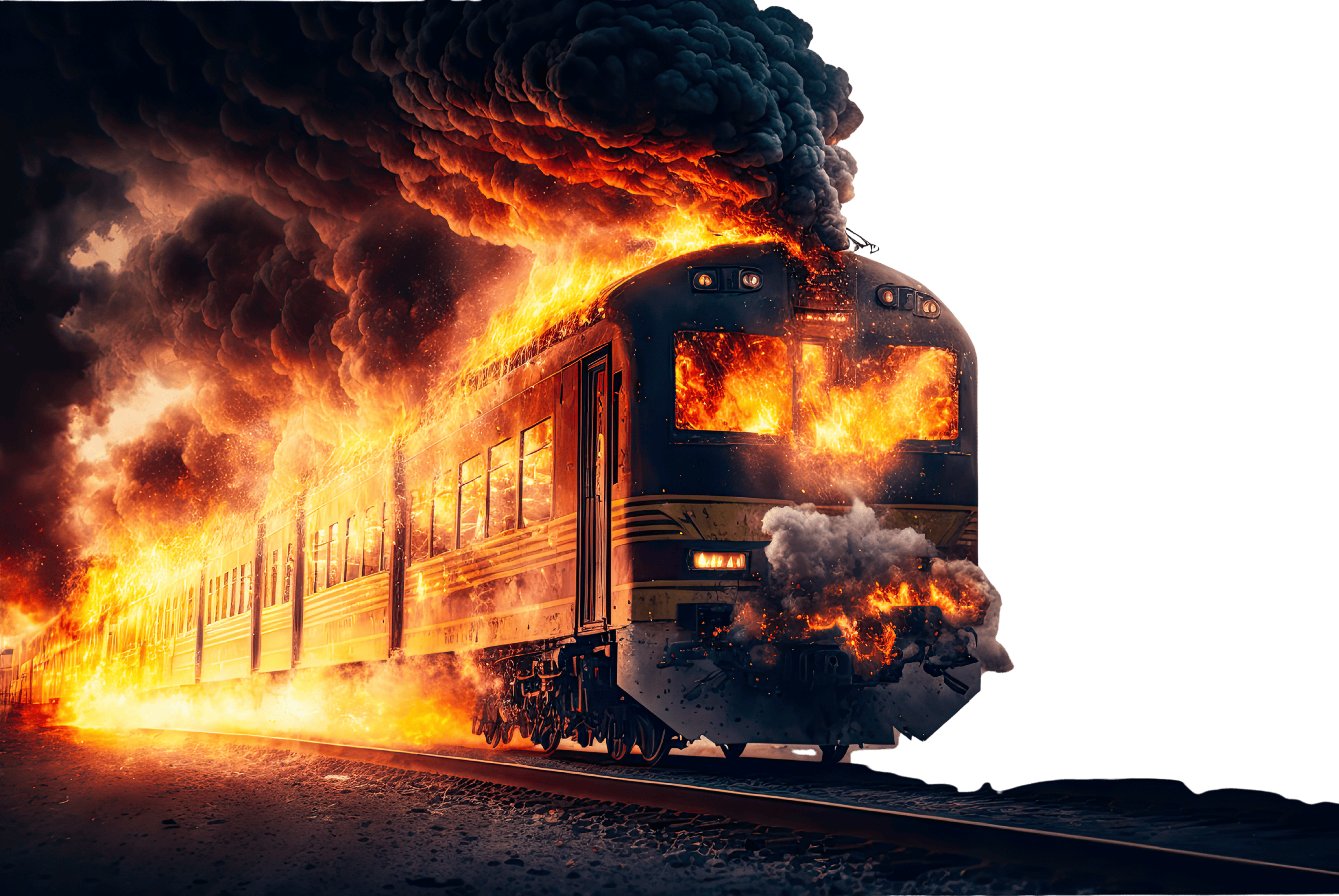
Over the last 20+ years, I’ve invested a lot of “free” time developing talks, workshops, courses, and more recently, writing books. I do this for one reason, most of all: to help others feel less alone in the world, riding on the Pain Train.
Chances are have ridden on it.
You’ve solved a difficult problem. Worked hard to communicate your ideas. Gathered feedback from others, made visuals, bridged gaps between silos, glued opposing perspectives, herded cats. You’ve made slides — you’ve prototyped.
Then: you watch an “easy” answer get heard instead – a “solution” that will make the problem worse (in the long run). The Product Manager says there’s no time to do it your way. That Guy, the one who knows everything (or so he believes) says it won’t work. The CXO says there’s no budget for anything but AI. The engineers say it’s not concrete enough.
The fix doesn’t hold, the problem recurs. And the cycle begins again.
Eventually, your recommendation gets adopted. By then, nobody remembers it was your idea. And anyway, you are already pushing the next rock up the next hill.
Hoping that this time, it won’t roll back down (and crush you).
Welcome to The Pain Train. Where the exhausting friction of turning information into shared meaning, decisions, and action makes you question every one of your life choices.
Early in my career, I didn’t have a name for it — the ways a system stays stuck in its own loops. I believed that more effort would help. If I work harder, I’ll break on through to the other side.
Hard work taught me a lot. But it never ended the endless cycle of fixing the same problems again and again, as if they were brand new and surprising everyone.
Over time, the Pain Train became familiar and inevitable. I might have ridden it all the way to retirement … if I hadn’t crashed into the wall of reality.
Like Truman in The Truman Show, I realized that we are trapped in a performance. Organizations want a “transformation”, then eventually, reconstruct the same problems, obfuscated by trendy new lingo.
Again and again. Why?
Pirsig sums it up best:
If a factory is torn down but the rationality which produced it is left standing, then that rationality will simply produce another factory. — Robert Pirsig, Zen and the Art of Motorcycle Maintenance
Every change designed to navigate the rising river of complexity, navigate faster flows of change — would inevitably fragment and revert to previous patterns.
As knowledge workers, We produce change. We turn raw information into concepts, recommendations, diagnoses, decisions, and action. As technologists, we shape those into working code.
And yet, most of us feel like we are running on an endless treadmill. Cogs in an inexorable, Sisyphean machine. The wheels keep turning but we can’t effectively steer.
Maybe we get some power. Then discover how difficult it is to apply that power to meaningful change.
I wanted to get off the Pain Train. And help us discover better, more productive, satisfying ways of making change happen.
Albert Camus said, “You have to imagine Sisyphus happy.” Accepting that life is meaningless, he said, is the key to transformation. Pushing the boulder can become freedom, he asks us to believe, transforming suffering into a source of personal power.
Pishposh.
These metaphors, the Pain Train, the mountain, and the boulder, heirarchies, and factores … we made them up. Humans invented our systems of labor. A system that, too often, is antithetical to knowledge work.
I want to do knowledge work.
The Pain Train is still part of my work life. Sometimes, I find myself on it again. But I have also discovered alternative realities. Pathways and practices that deliver better outcomes. Approaches that generate significantly better ways of working together.
Less pain, more transformation.
My journey continues.
Will you join me?