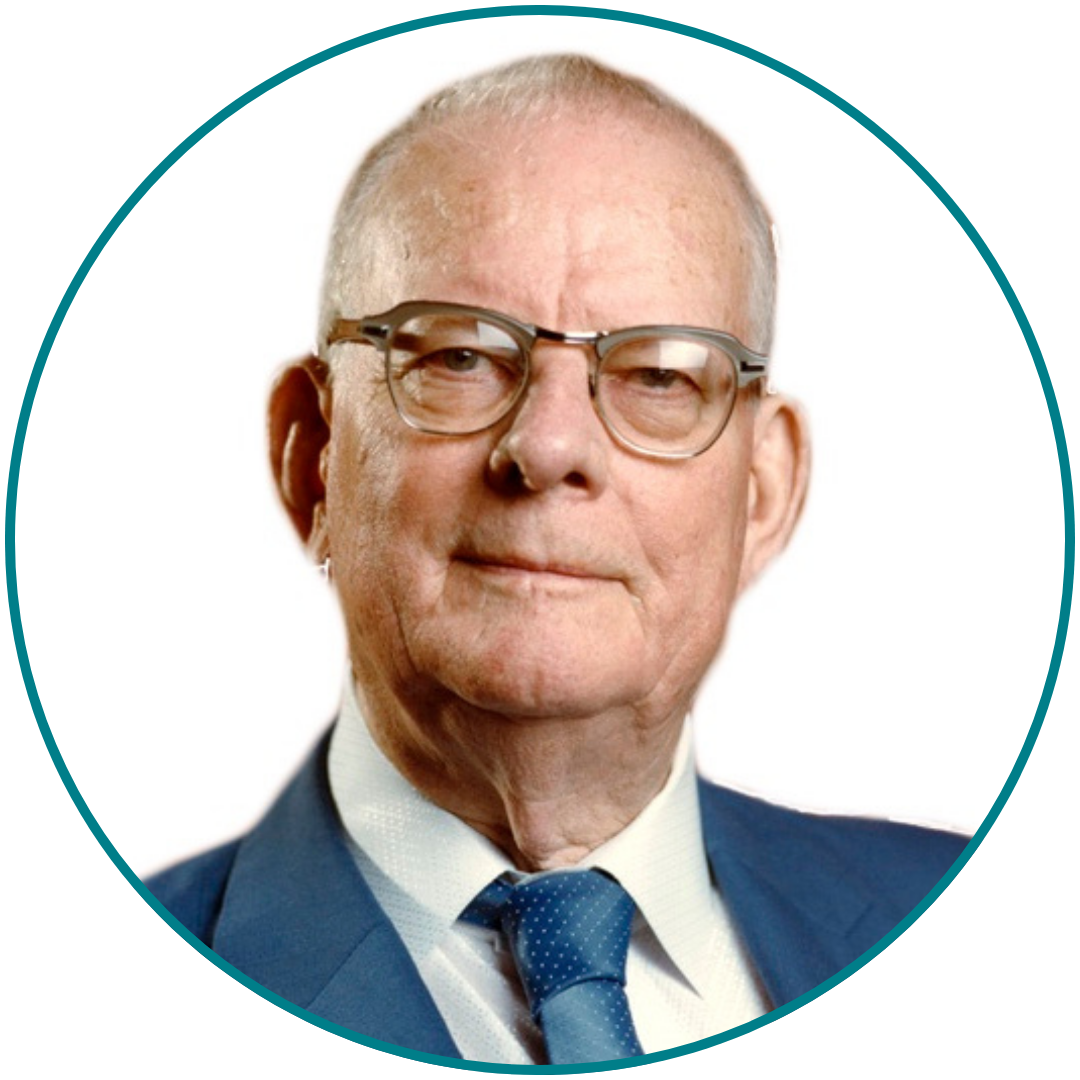
W. Edwards Deming was an American statistician, engineer, and management theorist whose ideas reshaped modern organizational practice. Trained in mathematical physics and statistics, Deming applied statistical process control to industrial systems, arguing that variation, feedback, and learning were the true levers of improvement. While initially overlooked in the United States, his work became foundational in post-war Japan, where it contributed directly to the rise of high-quality manufacturing and long-term organizational thinking.
Deming challenged dominant management myths: that performance problems are caused by individual workers, that targets alone create improvement, and that optimization of parts leads to optimization of the whole. Instead, he emphasized systems awareness, intrinsic motivation, and leadership responsibility for the environment in which work occurs. His thinking laid critical groundwork for modern systems thinking, Lean, and continuous improvement—and remains deeply relevant in today’s knowledge-intensive, sociotechnical organizations.
Relevance to Knowledge Flow
Most software and AI failures are not technical—they are systemic. Deming taught that optimizing parts of a system (teams, metrics, models, individuals) often degrades the whole. In modern software organizations, this shows up as velocity theater, brittle architectures, misaligned incentives, and AI systems that perform well in isolation but fail in real-world contexts.
Deming’s System of Profound Knowledge—variation, systems, psychology, and learning—maps uncannily well to today’s challenges: model drift, feedback loops, human-AI collaboration, and organizational sensemaking. His work reminds us that intelligence does not emerge from better tools alone, but from environments designed to learn. In an era of automated decision-making, Deming’s core message is newly urgent: you cannot inspect quality—or intelligence—into a system after the fact. You must design for it upstream.