
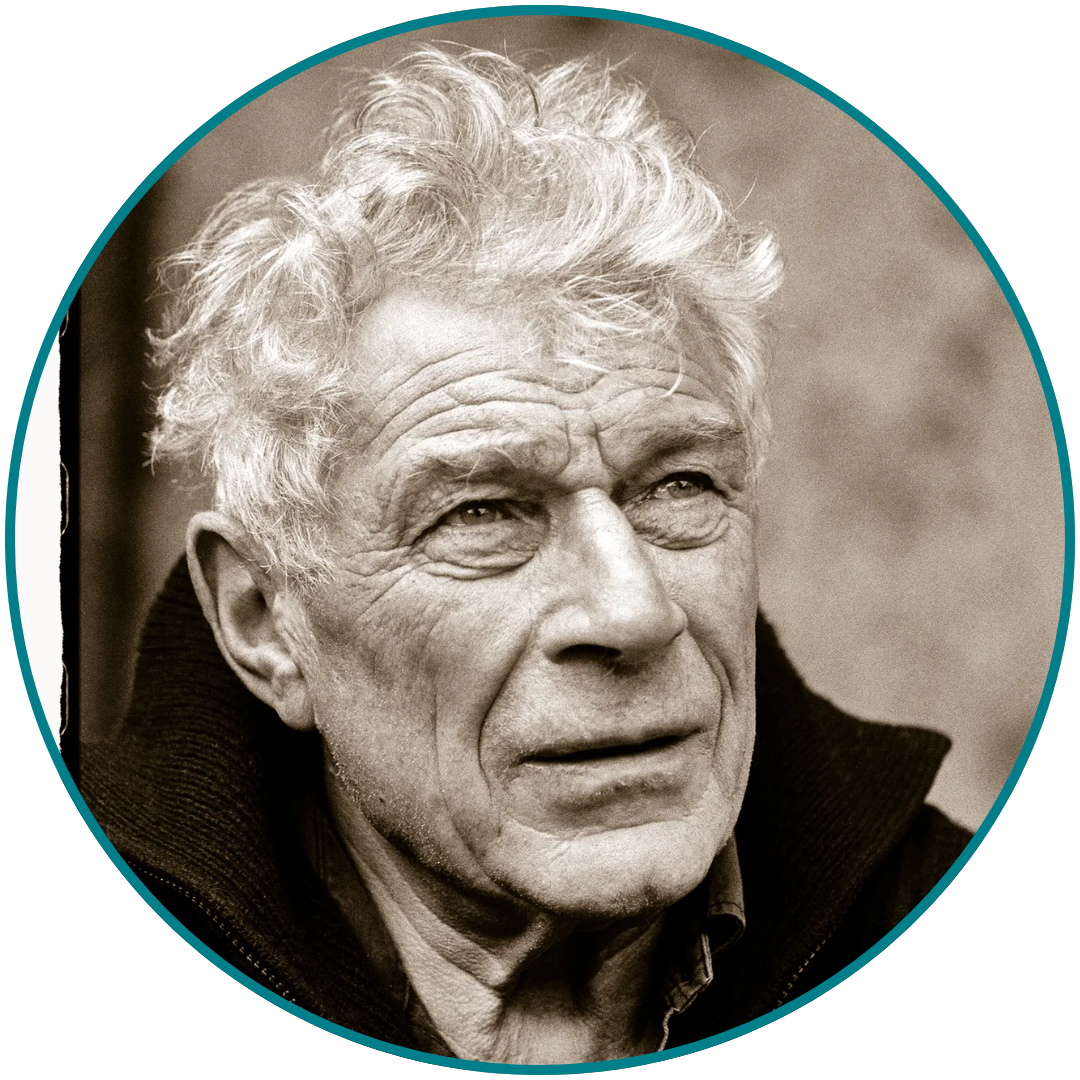
John Berger’s work explored the relationship between seeing, meaning, and power. Rather than treating visual experience as passive observation, Berger showed how images teach people what to notice, how to interpret, and where to locate value.
His writing and television work challenged the idea that art and media can be understood apart from the social, historical, economic, and cultural systems that shape them. He asked how ways of seeing are inherited, constructed, and reinforced by institutions, technologies, markets, and habits of attention.
Berger’s work is especially important for systems of knowledge because it reveals that perception itself is structured. What people see is not simply what is present; it is shaped by framing, context, memory, desire, authority, and learned interpretation.
Relevance to Knowledge Flow
Berger’s work helps illuminate a foundational concern of Knowledge Flow: people cannot act on what they cannot perceive.
Knowledge systems are not neutral collections of information. They shape attention, interpretation, and possibility. Berger’s work reminds us that seeing is an active, culturally situated practice—and that changing what people can see often changes what they can understand, question, and do.