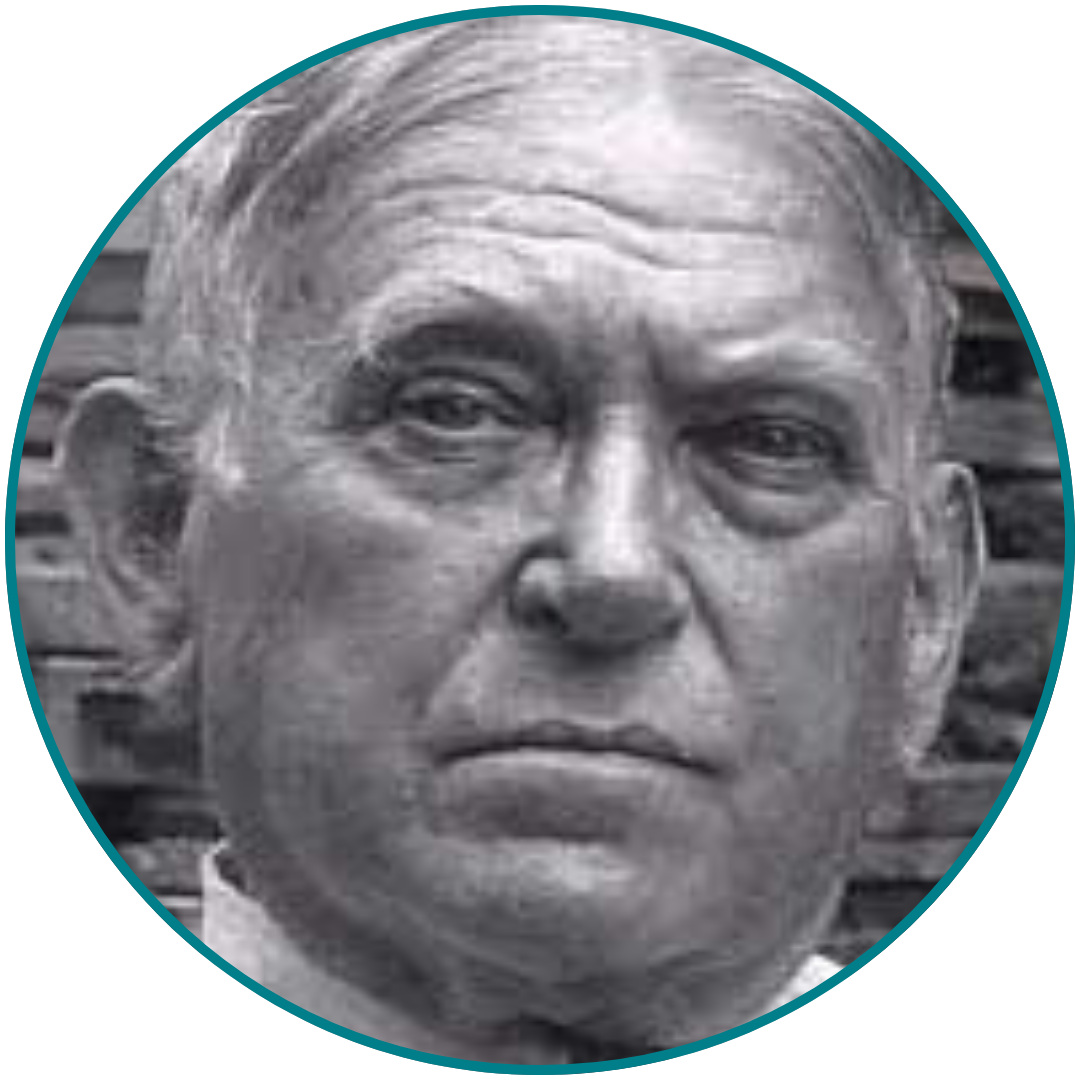
H. L. Mencken began his career as a journalist in Baltimore and quickly established a reputation as one of America’s most distinctive public commentators. His writing combined wit, skepticism, and intellectual rigor, often targeting political institutions, social conventions, and popular assumptions that he believed escaped critical examination.
As editor of The American Mercury, Mencken helped shape public discourse during the early twentieth century, publishing influential writers while encouraging vigorous debate about politics, culture, religion, education, and democracy. His work reached a broad audience while maintaining an unusually high level of intellectual engagement.
Throughout his career, Mencken was deeply interested in the relationship between language and thought. He recognized that public understanding is often shaped not only by facts but by the narratives, slogans, assumptions, and rhetorical structures through which those facts are interpreted. Much of his criticism focused on exposing these hidden influences.
Mencken became famous for his distrust of dogma and his willingness to challenge prevailing opinion. While many of his specific political and social views remain controversial, his broader commitment to skepticism, inquiry, and independent thought continues to influence journalists, writers, and critics.
His essays and observations remain notable for their clarity, humor, and ability to illuminate the ways institutions, media, and public discourse shape collective understanding.
Relevance to Knowledge Flow
Mencken belongs in Knowledge Flow because he was fundamentally interested in how ideas move through society.
Long before discussions of information ecosystems, algorithmic influence, or organizational intelligence, Mencken examined the mechanisms through which beliefs spread, narratives become accepted, and public opinion is formed. He understood that people rarely engage directly with reality. Instead, they engage with interpretations, stories, symbols, and social signals that shape what appears true or important.
Knowledge Flow is similarly concerned with the relationship between information and understanding. Mencken’s work highlights the importance of skepticism, critical inquiry, and the continual examination of assumptions. He reminds us that knowledge systems can become distorted when narratives are accepted without scrutiny or when institutions prioritize certainty over truth-seeking.
His writing also demonstrates the value of intellectual independence. Effective knowledge systems require participants who are willing to question prevailing assumptions, challenge dominant narratives, and remain open to evidence that complicates comfortable explanations.
For Knowledge Flow, Mencken serves as a reminder that understanding depends not only on access to information, but on the ability to think critically about how information is framed, communicated, and interpreted.