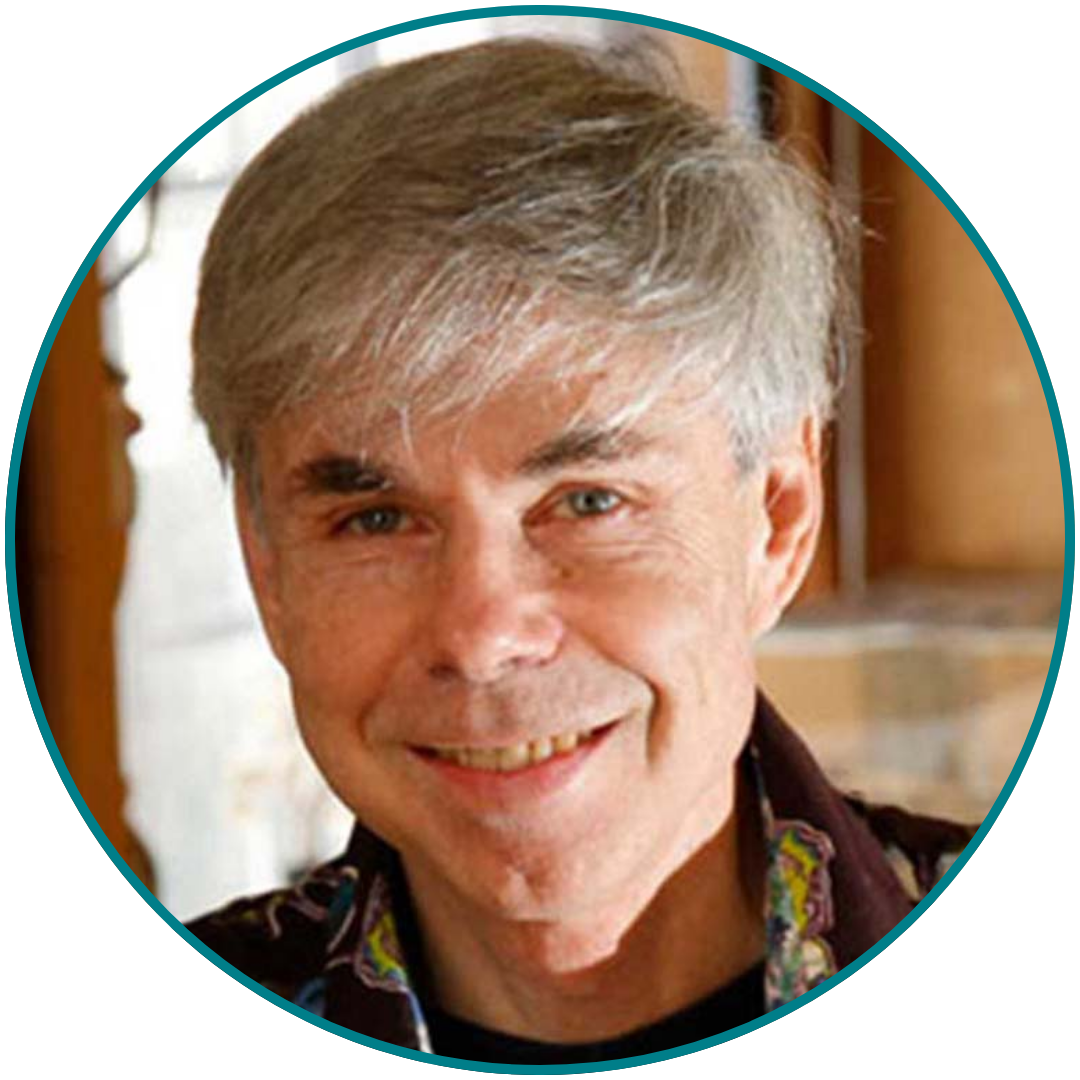
Douglas Hofstadter’s work explores the strange loops through which minds, symbols, patterns, and meaning arise. His writing moves across mathematics, music, art, language, artificial intelligence, and philosophy, showing how understanding often emerges through analogy, recursion, and pattern recognition.
Hofstadter is especially interested in how minds make meaning by perceiving structure across difference. Analogy, in his work, is not decorative comparison but a core mechanism of thought.
His playful, interdisciplinary style invites readers to experience thinking as movement between levels: symbols and systems, rules and emergence, formal structures and lived meaning.
Relevance to Knowledge Flow
Hofstadter’s work supports Knowledge Flow’s view that meaning emerges through patterns, relationships, and recursive interpretation.
Knowledge systems become more intelligent when they help people move between levels of abstraction, recognize analogies, and connect structures across contexts. His work also highlights the generative power of play, pattern, and intellectual curiosity.